HomeInsightsBriefing Your Coverage Team
How to brief the team covering your event in Libya
On the day of your event, the team covering it will have questions that only you can answer. How is the guest of honor's name written in English? Which sponsor has to appear in the photos? Has this guest agreed to be filmed? Who can approve a caption while the program is still running? Settle these questions and write the answers down beforehand, and the team can spend the day on your program instead of looking for you. This guide sets out what to put in a coverage brief for an event in Tripoli or anywhere else in Libya, and ends with a one-page checklist.
Why your event needs a brief before it needs a photographer
An experienced coverage team plans its work around your program. Some of what it needs, though, only you can give it: who is attending and in what capacity, how each name and title is written, which guests prefer not to be photographed, what you have agreed with the venue, and who can approve material. A coverage brief is the page or two where you write that down. The team builds its coverage plan on it, and nobody has to guess on the day.
Our page on event coverage in Tripoli, Libya sets out how the coverage itself is planned, what it delivers and by when, and whether anything is published during the event. This guide is about your side of the work: the facts and decisions the team needs from you before the doors open.
Names, titles, and protocol
A misspelled name or a wrong title in a published caption is the mistake guests and partners notice first, and it is hard to take back once the post has been shared. Before the event, send the coverage team one list, approved by whoever handles protocol in your organization, with:
Names in both languages. Every guest's and speaker's name as it should appear in Arabic and in English. An Arabic name can be spelled several ways in English (Mohamed, Mohammed, Muhammad), and a foreign name several ways in Arabic, so ask each guest's office which form they use.
Titles and honorifics. The official title as the guest's own organization writes it, in both languages, and any honorific that goes with it (H.E., for example). Use the same form in the captions, the news story, and the posts. Check all three against the list before they are published.
Official guests. Who is attending in an official capacity, when they arrive, where they sit, and whether their office is bringing its own photographer or security team. If so, the coverage team needs to know in advance where it is allowed to stand.
The running order. The final order of speakers and sessions. If it changes on the day, one person tells the coverage lead, so the photos and captions follow the program as it actually ran.
Partners and sponsors. Every organization that has to be named or shown, the order in which they appear, the correct form of each name, and the approved version of each logo.
Build the shot list from your program
The coverage team decides how to photograph and film your event. What has to end up in the record is your decision, because only you know which handshake matters to your board, or which sponsor expects to see its banner in the photos. Take the printed program and go through it item by item, marking:
Moments that happen once. The opening, a signing, an award handed over, the group photo. Write the time next to each, and tell the team which ones cannot be staged again if they are missed.
People who must appear. The guest of honor, partners, sponsors, and anyone whose organization will ask for photos afterwards. Each name on this list needs a face the team can recognize, or someone from your side who can point the person out. After the event, check the photo selection against the list.
The room and the details. The hall with the audience in it, the stage, the stands or products on display, the signage. Photos of the room are the ones you will reach for later, when you need to show what the event looked like.
Two things at once. If two marked moments overlap, say a session on stage while the guest of honor tours the exhibition, decide in advance which matters more, so the team can split up or choose on the spot.
What stays off camera. Any session, room, or guest that must not be photographed. Write these down as clearly as the moments that must be.
Consent, press access, and venue rules
Tell guests before they arrive that the event will be photographed and filmed, and where the material may appear. Say it in the invitation and again at registration. Give anyone who would rather not appear an easy way to say so, such as a different badge or a word with the team at the door, and pass those names to the coverage lead.
If you are inviting news outlets, send each one an invitation with the date, the venue, the program, and the name of the person who will meet them on the day. Decide whether the press stays for the whole program or only the opening, and set aside a place where cameras can stand without blocking the audience's view. After the event, make sure the news story and a selection of photos reach every outlet you invited, including those that did not come.
Ask the venue what it allows before the coverage team has to ask on the day: when the crew can come in to set up, where cables and lights can go, and whether any area is off limits for filming. Hotels and halls set their own rules.
Finally, agree how the photos and films may be used after the event, whether on your own channels, by partners and sponsors, in the press, or in future campaigns. A guest who agreed to appear in the coverage of an event has not necessarily agreed to appear in an advertisement, so campaign use needs its own permission.
One person signs off on the day
Name one person who can approve captions, posts, and quotes during the event, and check that the same person is not also speaking or hosting the guest of honor. Name a deputy for the moments when the first is busy.
Agree in advance what needs their approval and what does not. Photos of the room may need none, while anything that quotes an official or names a partner should go through them.
Give the coverage lead the approver's phone number, and introduce the two before the program starts, since the coverage lead will need to find the approver once the hall is full. After the event, the same person approves the final material, so the names and quotes in it match what was approved on the day.
A one-page checklist
Copy this table into your own planning file and put a name next to each line.
Coverage brief checklist
| Before the event | On the day | After the event | |
|---|---|---|---|
| Names and titles | One list in Arabic and English, approved by protocol and sent to the coverage lead | Changes to the running order reach the coverage lead | The news story and final captions checked against the list before publishing |
| Shot list | The program marked with moments, people, times, and what stays off camera | Someone who knows the guests points them out to the team | The photo selection checked against the people who had to appear |
| Consent and use | Notice in the invitation and at registration, and an easy way to opt out | The coverage lead has the names of guests who opted out | Material used only as agreed, with separate permission for any campaign |
| Press and venue | Invitations with the date, venue, program, and a contact; the venue's rules checked | One person meets the press, and cameras have a place to stand | The news story and photos reach every outlet you invited |
| Sign-off | An approver and a deputy named, and what needs approval agreed | The approver can be reached by phone and is not on stage | The same person approves the final material |
Where Pattrix comes in
Our events system covers full event planning, institutional coordination, speaker and program management, and media and coverage execution, all handled by one team. If your event already has an organizer, we deliver the coverage. We are based in Tripoli and cover events across Libya.
Photos and film are shot and edited by the same in-house production team that serves our campaigns, the team behind our content and video production. We write news material for the press in Arabic and English, as part of our public relations work in Libya.
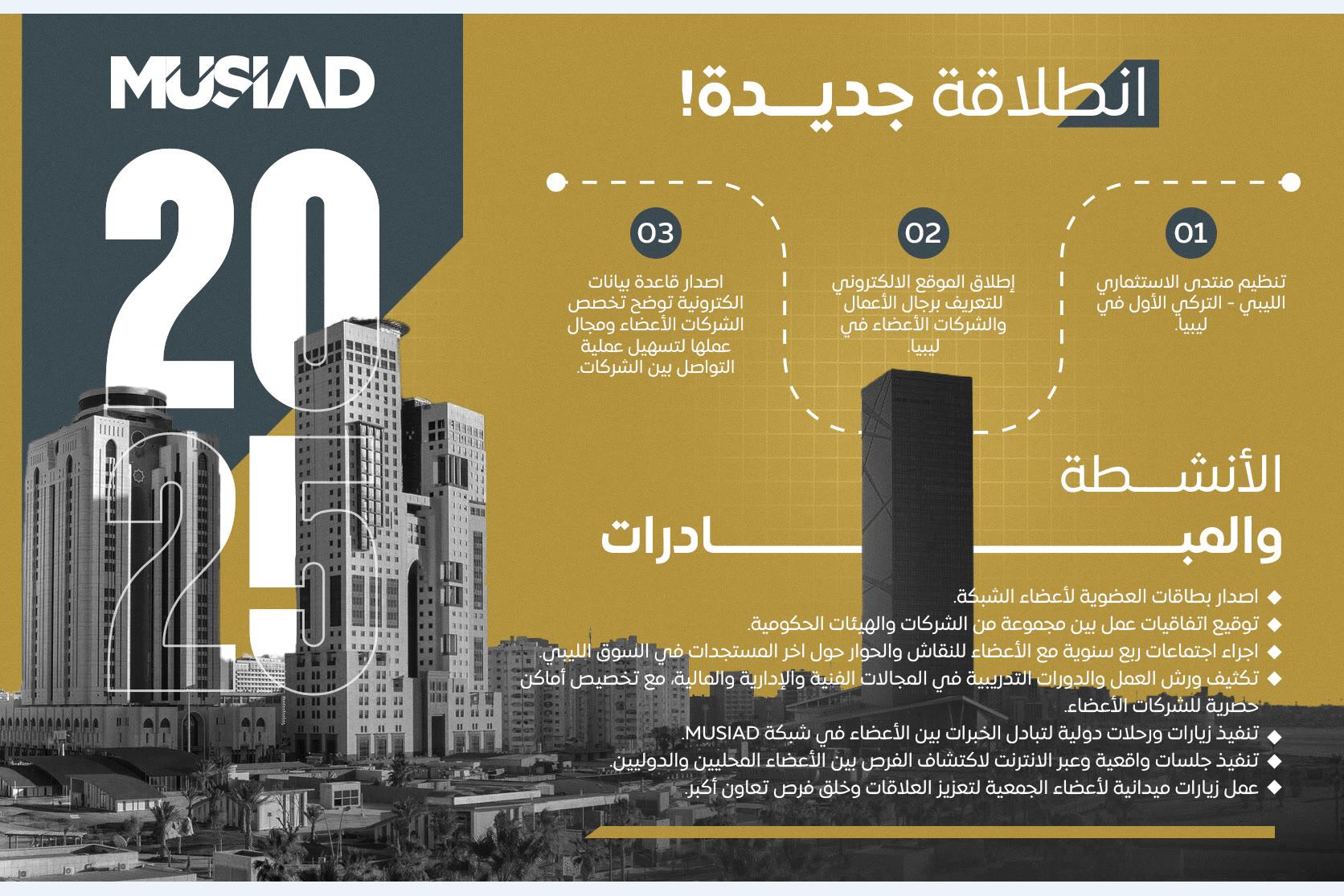
For the MUSIAD business network in Libya, we handled event branding, program media, and coverage of its business gatherings.
Related reading
- How to choose a PR agency in Libya
- How to choose a marketing agency in Libya
- What strategic communications means for Libyan institutions
- PR vs marketing: what businesses in Libya actually need
- Why campaigns in Libya fail without analysis first
- Before you hand over your company's pages in Libya: what to settle first
- Entering the Libyan market: a communications plan for your launch
- How to commission an ad video in Tripoli, Libya
- Ramadan campaigns in Libya: what to prepare and when
Send us your program.
Tell us the date and the venue, and we'll plan the coverage around your program before the doors open.